
“Whimsy and poignancy… and bees.” — Indie film-making with Sam Pope
Interview by Robin Layfield | Amplify Stroud
May 2026
RL: Tell us a bit about how you came to make “The Little Cinema in Gloucester”
I went to film school in Manchester a very long time ago and Black Dog Way was my first feature-length documentary. It was an absolute mission but I really enjoyed the process, and it was a bit of an odyssey.
During post-production, while we were trying to fundraise for money to finish the film, I had an idea to go off and do a short film, just something that was a quick turnaround, a little passion project, and something which I thought would be important as a little tiny portrait piece, maybe do as a ten minute thing. I could put it on Instagram and then that would be it.
I got to thinking about how the Pandemic affected all of us in the film industry but mainly cinemas and especially independent ones.
I was really worried that the Sherborne in Gloucester might end up like the Electric in Birmingham and many others, shutting its doors permanently.
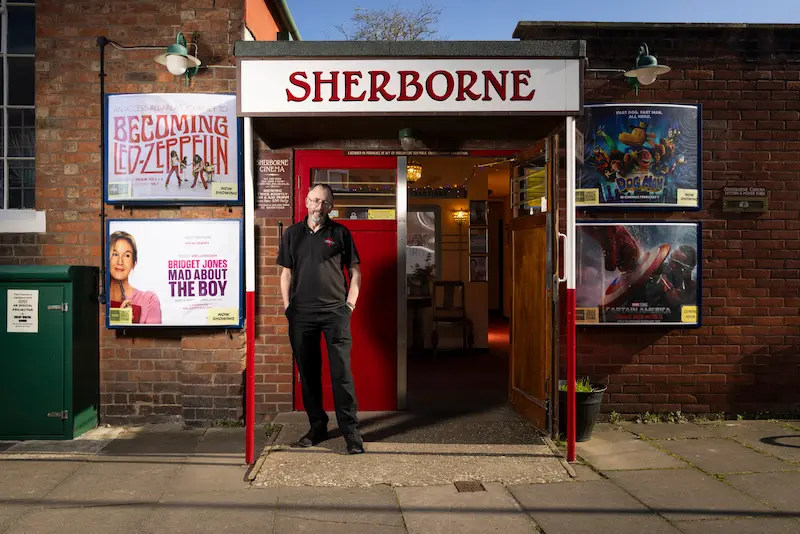
I felt duty bound to document this wonderful and rather unique little cinema. Partly as a love letter to venues and cinemas like this, but also as a rallying cry. A bit of defiance towards what was happening to independent cinemas around the world.

AMPLIFY STROUD is 100% reader-supported and we can't do this without your help.
I went down to the Sherborne cinema and I became good friends with Mark Cunningham the owner.
I proposed the idea very tactfully, and I was really surprised he said yes. He probably was doing it because he was humouring me, and he was thinking, “oh, yeah, sure, whatever, you know, it'll be a student film or something.”
He was really open and really generous with his time, and he was really honest, it was fascinating, because I began to learn just how much he knows, how long his career's been, what he's done, and the fact he's this very talented sign painter, and he was a projectionist, and how he pretty much renovated and decked out the Sherborne by himself, with just a little help.
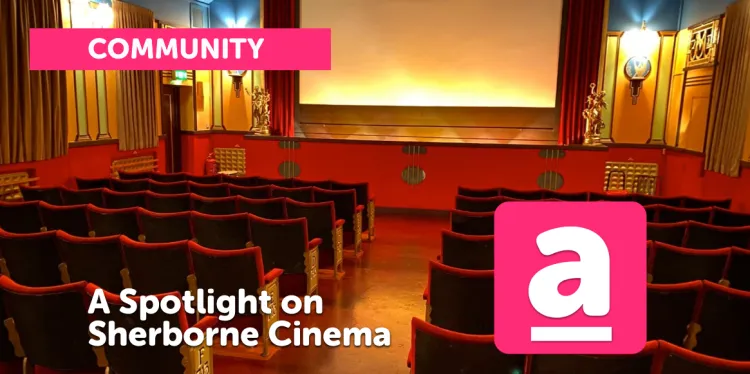
It's beautiful. I mean, he did such a great job because the actual shell of the building, the original structure, was a Methodist chapel that had basically just fallen into disuse and was empty. And as Mark talks about in the film, he went to the auction to basically outbid people that were probably going to knock it down and plonk some new houses on the land.
We didn't really get any funding to make the film about the Sherborne. We were approaching loads of different people, loads of different funding bodies and no one seemed to be interested in funding us.
So, in the end, I just got on with it, and I self-funded a very large chunk of it, and we made the film.
“And it was nice, because then when you show it to people, the usual response is “oh, this is really great!’ And I say ‘yeah, I know, told you so. Would you like to give me some funding now, please?’”
We've spent an entire year going around the film festival circuit, just in the UK and we've been selected for about 10 or 12 festivals, which has been fantastic.
A lot of them were short film festivals. There were a couple that were slightly bigger, but most of it was just testing the film to see if there was an audience for it, if people liked it. A lot of the feedback for me, Katherine Glenn-Jones, (Editor) and Tom Crawford (Music), was really encouraging, people really loved it, there was such a great response.
The screening that we did back in March with Stroud Film Festival, that was a sellout.
That was fantastic because the response we got there was a validation of all the hard work, the graft and the money and everything we poured into it.
I'm really glad we put in the effort and made this film.
And then, the other thing about film festivals is that you have an opportunity to sit in with an audience watching your film and you have total anonymity for the whole screening.
Everyone sat around you has no idea, they don't know that you've made the film, so you sit there and you're listening to the people around you and taking all that feedback in.
RL: Are you the same production team that made Black Dog Way
Pretty much the same team. Tom stepped in to do the music for this one because Dean Jones, who did the music for Black Dog Way wasn't available to work on the film at the time. This happens a lot in film-making where people end up doing different jobs, stepping in, filling the gaps. It's how you get a film made.
RL: You're screening ‘The Little Cinema in Gloucester’ actually at the Sherborne. What's that going to feel like?
I won't give anything away, but yeah, it'll be a very interesting experience watching a film about the cinema that you're sat in. It will be very poignant.
Andy Freedman and Derrick McLean from Stroud Film Festival have been really supportive - they're keen to partner with the Sherborne, and hopefully include them in the festival next year in March which would be wonderful.
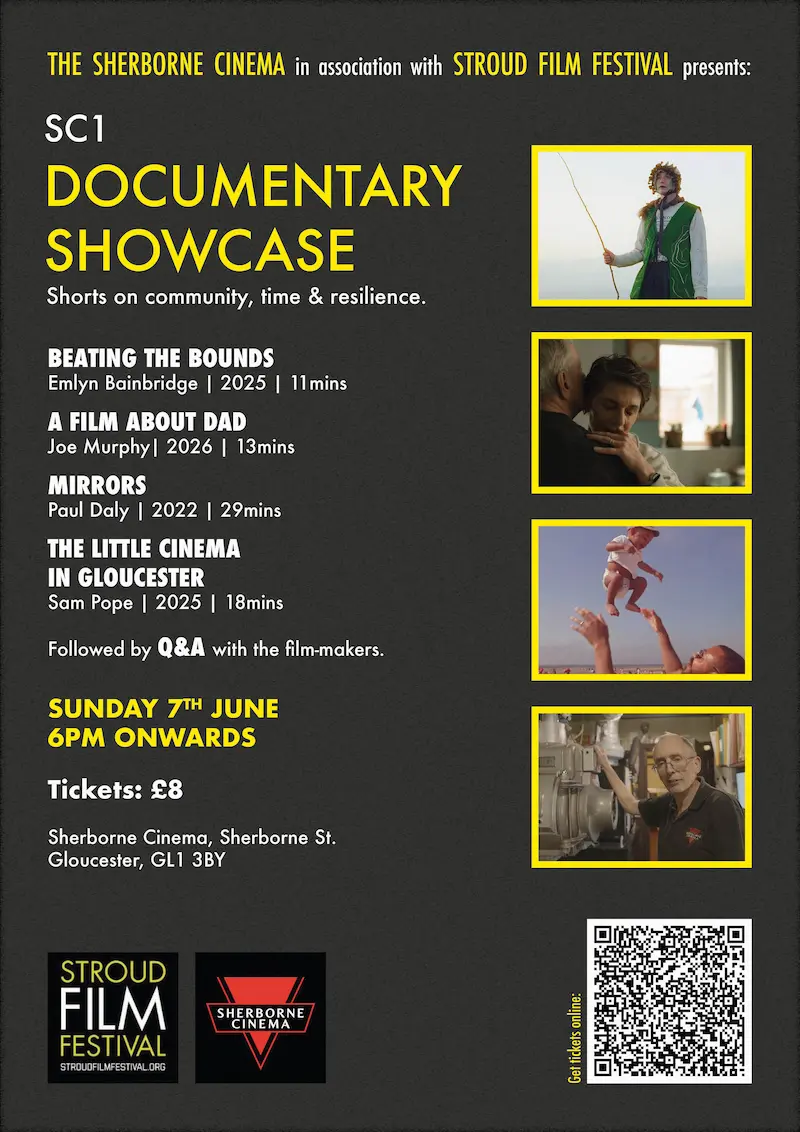
The event on Sunday, the 7th of June, is an opportunity to bring it home to finish our film festival run
We are going to showcase some other really talented filmmakers as well. So, Emlyn Bainbridge has made this really beautiful documentary about Boss Morris called Beating the Bounds.
Emlyn Bainbridge — Beating the Bounds (2025)
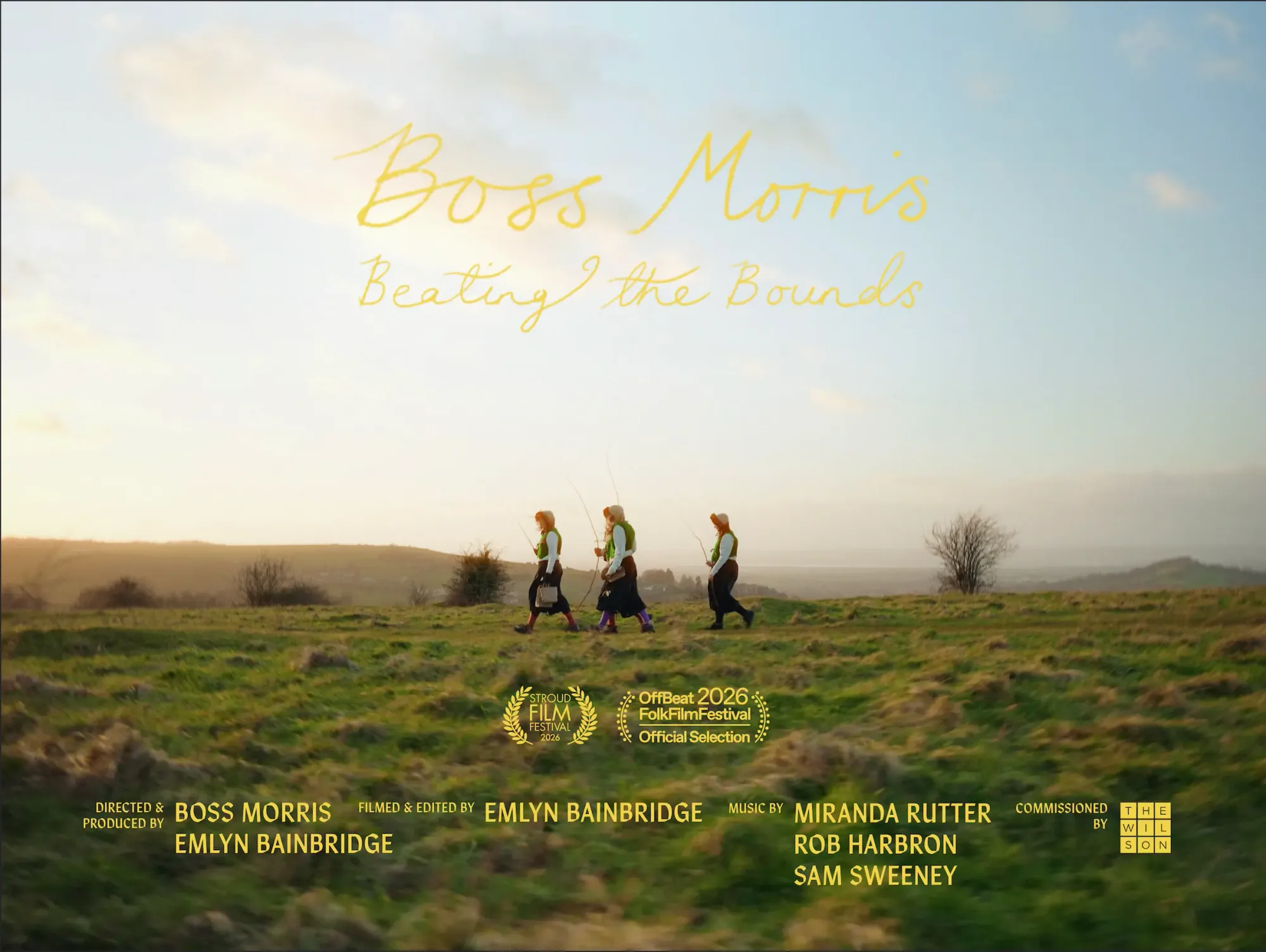
I saw it at the Wilson Gallery in the exhibition in context. It works really well as a piece of cinema, because it's just a really beautiful.
Paul Daly — Mirrors (2022)
RL: I went to see Jeremy Deller a couple of years ago at NeoAncients, and he had a film all about rave culture and the organic folk culture of protest - the hidden underground commonwealth of ordinary people standing up for one another. I feel like Mirrors is a meditation on that same topic and it's a film I've wanted to see for years.
Yes. It is. Yeah.
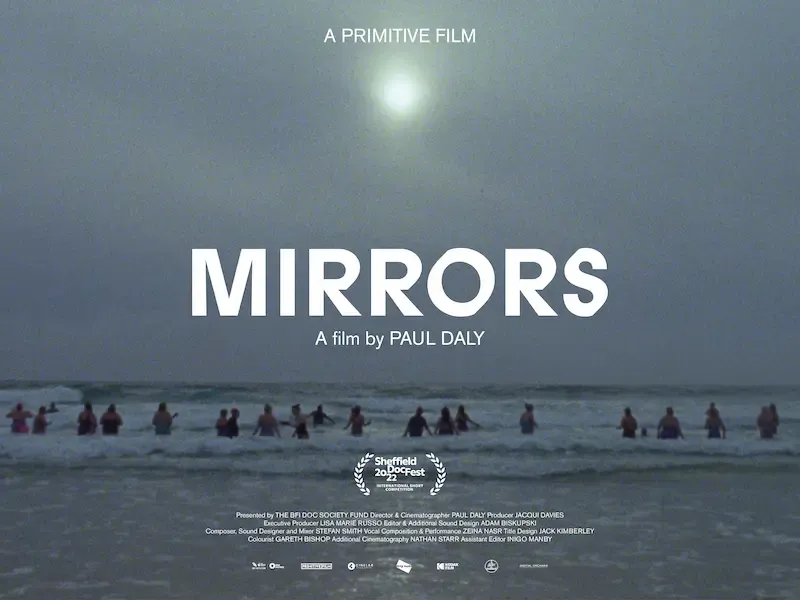
Mirrors is the third film, which is another silent film, and that's Paul Daly, so that's part one of a long term project to take a portrait of the entire country, pretty much, on 16mm film. Paul has documented Britain over a seven year period from 2016 almost all the way to the present day and is now working on his next film Shadows. Paul uses analogue gear and real film that gives his work a very intimate, archival-quality feel.

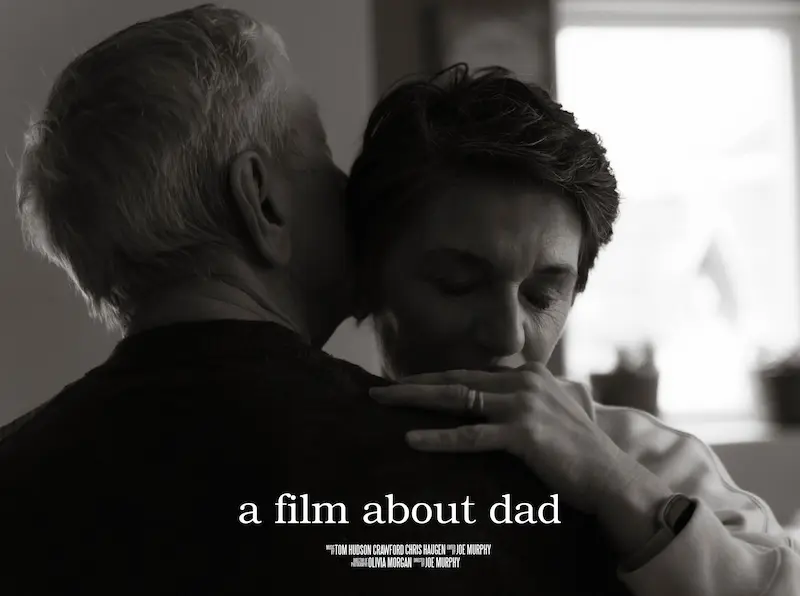
Joe Murphy — A Film About Dad (2026)
The fourth film is by this young lad called Joe Murphy. So me and Tom met him at the Gloucester Independent Film Festival where he was showing a short documentary alongside us about this comedian that he'd met in the north of England. It was called Milking the Dog, and it was this really bizarre, strange tribute to this comedian and his efforts to get a laugh.
And it was poignant and tragic, and very awkward, but it was very funny and very charming, and you did really feel for the the guy that Joe was doing the portrait of.
So we had a really nice chat with him, and he was such a lovely lad, and he was planning on doing another film about his dad going through a diagnosis for Parkinson's and dementia.
Tom Crawford wrote a piece of music for the end of the film.
It's a beautiful film, so we thought, why not? And he's in the middle of his film festival run, so we invited him to join our screening.
Are the filmmakers all coming to the event? Will there be a discussion?
Yes, that's the general plan. So, Emlyn's gonna be there, Joe's going to come down, Paul's going to come up from Coventry.
Andy has asked Nikki Laine if she'd be kind enough to come down and chair a session with the film-makers at the end and she has agreed, which is brilliant!
What's next for Sam Pope?
WELL, WE'VE GOT A COUPLE OF THINGS that are on the go, so I've been helping a friend to write a play.
I worked with Halima Malek — she is just amazing! We did a performance of her play, “Her Name Wasn't Banu” which is the story of her mum emigrating from a tiny little village in India to England in the 1970s.
We did a 25-minute live performance of it with an audience, supported by Strike-a-Light.
I helped to produce it, so I was helping to write it and produce it and Dean Jones and Shivani Sen wrote the soundtrack.
We were deciding on the format - it started off as a kind of Radio 4 podcast serialisation. And then it became a dramatisation of a one woman's show.
It's the first time that Halima's written something herself about something so deeply personal to her.
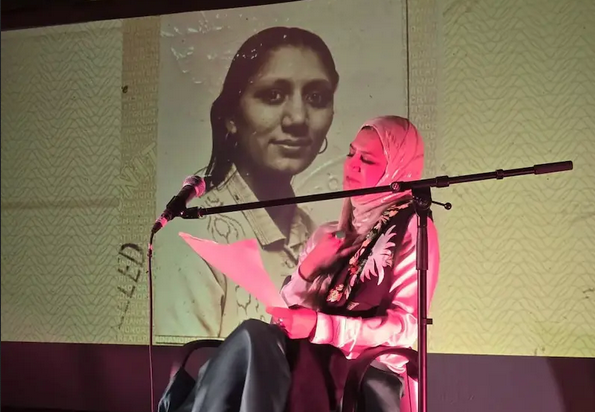
Being there for the show, I was really blown away because it's such a beautiful, poignant and current story. It’s the story of hundreds and hundreds of different women. Mums, daughters would have exactly the same story.
And there's the added layer of being Muslim and being Indian, and having an arranged marriage via telegram.
The Bees
IN ANSWER TO YOUR QUESTION about what's next: Katherine, Tom & I are developing another documentary idea.
It's really early days with this one, but we're talking to beekeepers, and we're talking to people about the countryside, and pollination.
RL: It's almost mystical, isn't it? You've got the smoke and the outfits and stuff, it could be straight out of The Wicker Man.
Yeah. It is got a fascinating medieval, ancient history to it. I guess what we're aiming to do is to dispel a lot of myths around how people keep bees, what's happening to the bee population and why it's collapsing.
We've inherited a lot of ideas of what we think nature should look like, and how nature should behave. I think people have an aesthetic idea, maybe a Victorian idea of what gardens and natural spaces should look like. Now, that isn't because, you know, we're inherently misguided or evil, or we want to do bad, it's just that we're not looking at nature in the right way…
RL: The manicured lawn, it's basically colonialism writ large. It's like, we are so powerful, we can dominate even this wild landscape, make it perfectly flat, perfectly green. And now people are buying astroturf lawns because they want their gardens to look even more "perfect." Where is the nature there?
So you think about it. Why is it that we feel that nature needs to look so manicured? Is it an extension of people's houses?
You just need to leave nature alone. Nature's alright. I mean, if all human beings disappeared tomorrow, nature would be absolutely fine.
And I've got a title for this film, I've got an opening… a couple of lines for it, I've got an idea for the music, we have about 10 or 12 people that I want to interview.
So everything's there. As per usual, it's the money.
Editing the Films
KATHERINE GLENN-JONES IS part of your production team - she edited the final cut of Black Dog Way and The Little Cinema in Gloucester.
Can you tell me a bit about working with Katherine and the editing process itself?
Features are wonderful things, but you do need someone who's brave, who's going to go in and edit them because for documentaries to work, you have to tell a compelling story. That's where the editor comes in. A good editor can find that story in all the random component parts.
Film-making is an editor's medium for a good reason, but documentaries are even more so, I think.
All of them. Literally. And the thing that's so frustrating about the way that the industry works, how male-centric it is, is the fact that even though you have, you maybe have a great auteur, someone who's working with actors, and lets face it, directing people is hard.
But if I'm honest, the film wouldn't be a film if it wasn't for Katherine. She's the real reason that it's any good.
Same with Black Dog Way, same with any of the other projects we've worked on together. If it's She Sees, or if it's, you know, any promotional stuff — and we even did a wedding video together for a friend of ours. You realise her talent. Katherine is a really talented cinematographer.
But it's when you get into the cutting room, it's how Katherine's able to piece all these fragments together and find a narrative just by looking at all these fragments.
AMPLIFY STROUD is 100% reader-supported and we can't do this without your help.
Now, I think the thing that's really lovely about it is the fact that there's a real division of labour when it comes to Directors, Cinematographers, and then Editors.
I never edit my own work because I need to have some distance from it. I've edited my own work before, and I've just got lost in the woods.
And Katherine's will say, “this makes no sense, I'm leaving it out.” And I'm like, “no, we can't do that!” And she will come back with “it makes no sense, Sam. It's bloated, it's rambly, and it's actually making the film unwatchable.” We cut the clip and then everything is all OK.
And the really nice thing about how we work together is that we have a shared joy in finding poignancy and whimsy. We love comedy, and we love stuff that's a bit esoteric and funny.
It's very British, that whole tension between happiness and sadness, and darkness and light. And whimsy is a really important part of that.
And the really nice thing about the whimsy, and the comedy, and the fact that you're laughing with your subject, is because you can tell that you've done your job well when the audience laughs along at the points where they are supposed to.
We should say, actually, the most important person here is the editor. Yeah. Give her the credit. I think that's fair, I think that's fair, and maybe that would change people's minds as to the fact that it's an editor's medium and their work is so much more important than it is given credit for being.
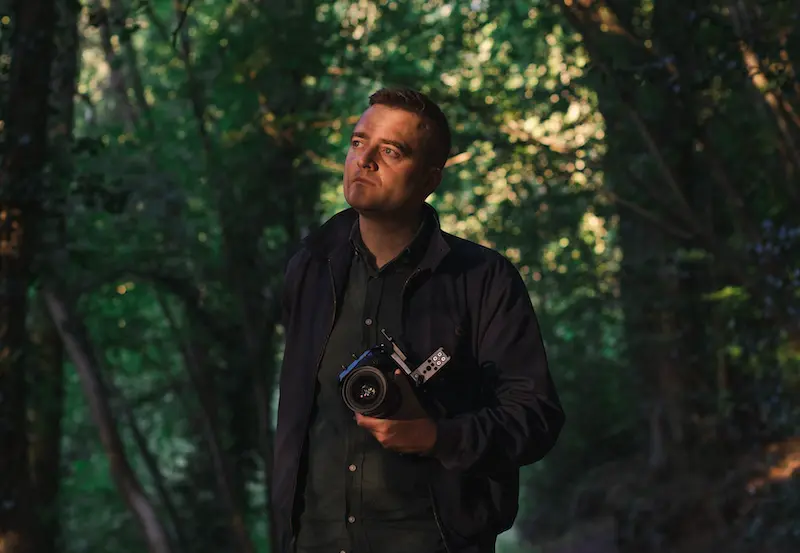
Sam Pope is a filmmaker based in Stroud, Gloucestershire, with a deep passion for storytelling. Inspired by the works of Errol Morris and Nick Broomfield, he aims to uncover "the universal in the personal" through thoughtful and engaging narratives. He works for Imaginary Man Productions.

Amplify Stroud is supported by Dialect rural writers collective. Dialect offers mentorship, encouragement and self-study courses as well as publishing.
You can find out more at https://www.dialect.org.uk/
Member discussion