
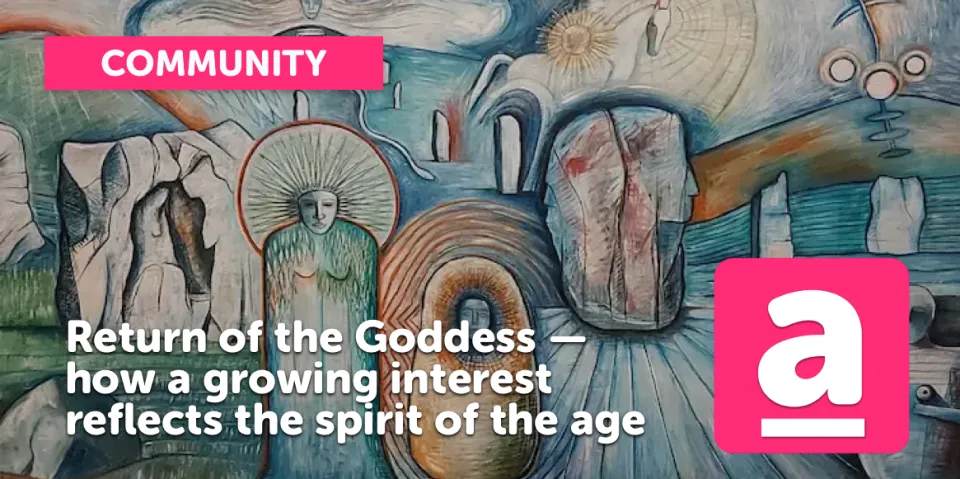
Return of the Goddess — how a growing interest reflects the spirit of the age
Kate Dineen | Stroud Goddess Temple
April 2026
THIS REFLECTS THE RESURGENCE of interest in Goddess culture across the world, the UK and here in the South West too.
Glastonbury Goddess Conference is a well-developed international conference which has been going for 30 years and attracts Goddess scholars and participants from all over the world. The conference grew out of the long established Goddess Temple in Glastonbury open to visitors.
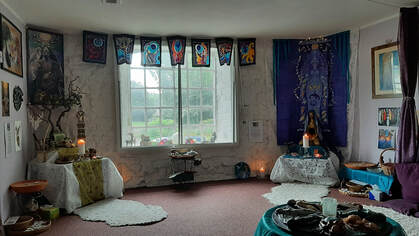
Closer to home there is Bristol Goddess Temple; and while the recently established Goddess Temple in Stroud has had to relinquish its physical home, it is still operating in online form and as a pop-up form at festivals.

Meanwhile, in Stroud in 2022 artist Sarah Dixon put on an exhibition ‘100 Goddesses’ at the Lansdown Gallery, including a vibrant depiction of Cuda. And “Cuda ex Nihilo” by local poet Juliette Morton was featured in an exhibition entitled ‘Invoking Absence’ in 2021.
 Sarah Dixon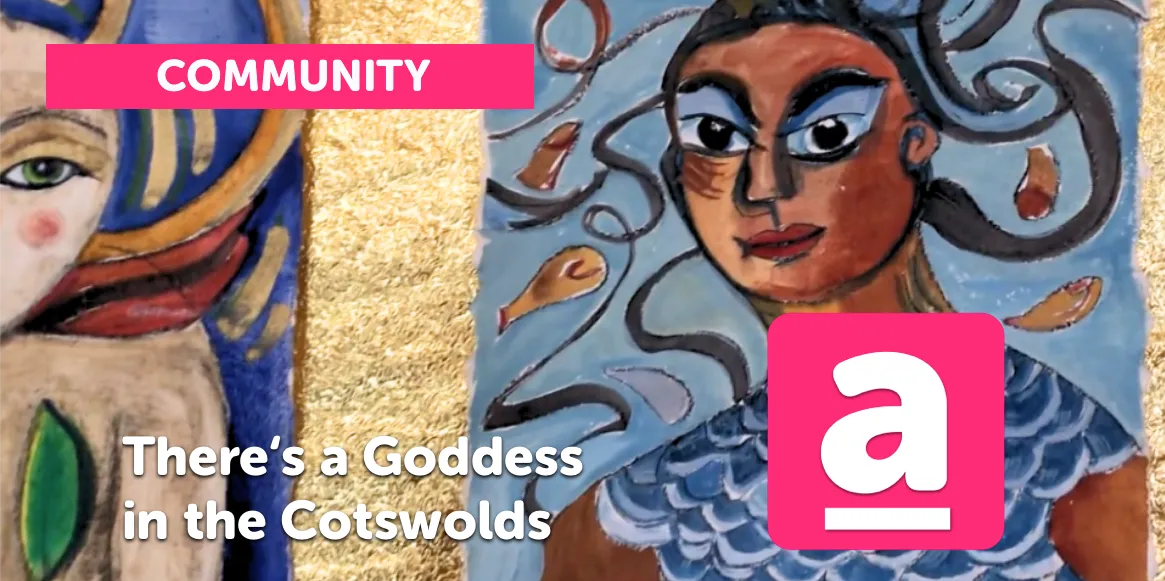
Remembering Cuda
But how has it come about that people in Stroud are once again remembering Cuda, our local Iron Age Mother Goddess?
Cuda first spoke to me at the ‘Incendiary: Set on Fire’ exhibition in 2018 in Lansdown Gallery curated by local artist Patricia Brien, where she exhibited her frieze depicting Cuda and her hooded attendants, the Cuculatti.
Patricia placed this enigmatic local Goddess at the heart of a call to earth stewardship. Inspired by the exhibition, I read 'The Tribe of Witches' by Stephen J Yeates, an archaeologist who writes about Cuda as a Goddess worshipped by the Dobunni tribe here in the Cotswolds.
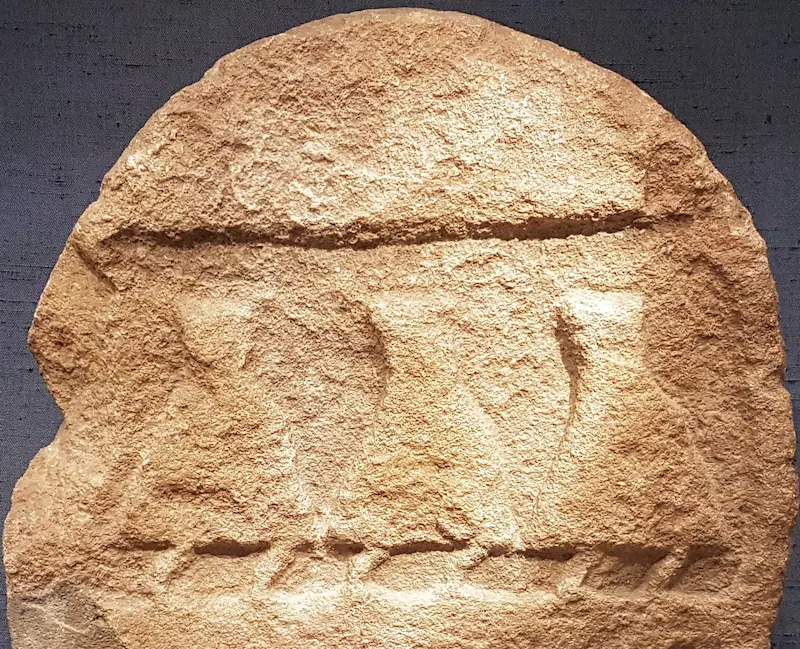
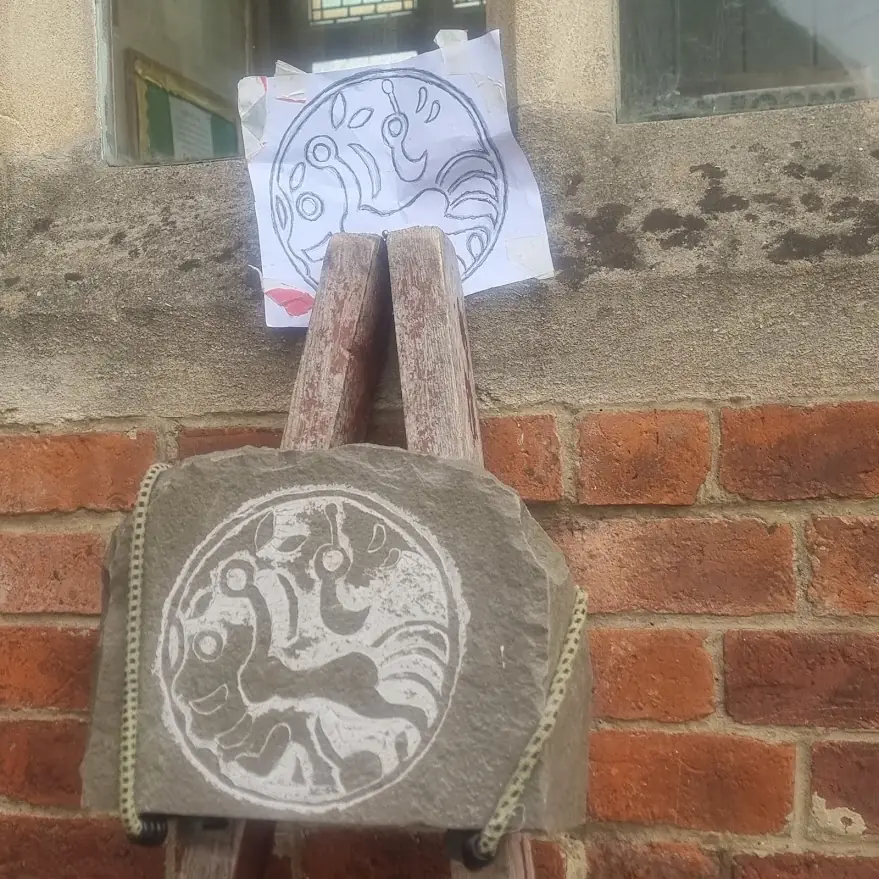
The Daglingworth Cuda
As Yeates explains, the name Cuda comes from a Roman plinth (pictured) that was first discovered in 1951 when it was dug up in a field near Daglingworth.
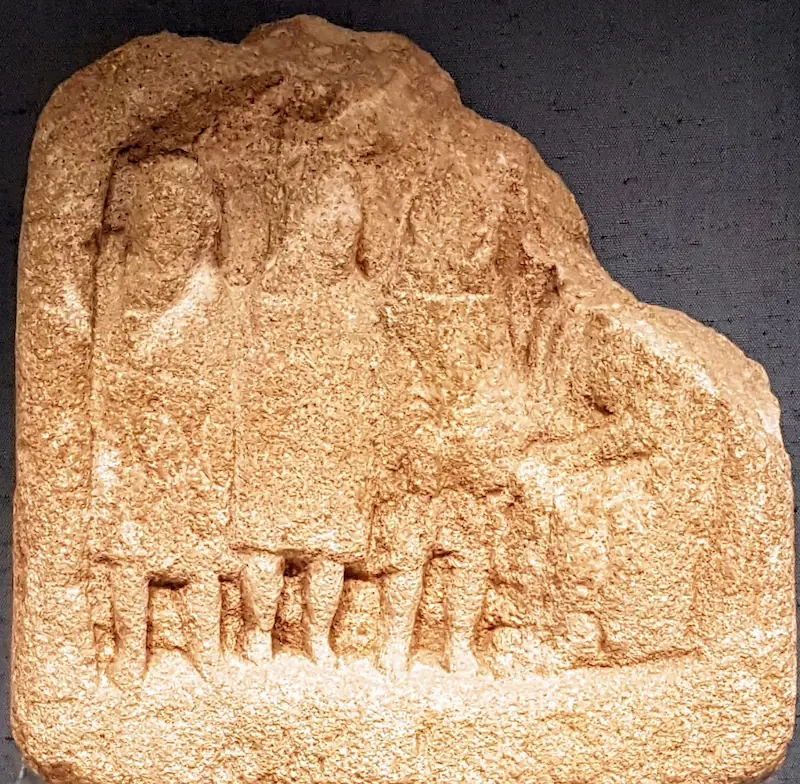
The inscription, as shown in the picture, is not visible to the naked eye.
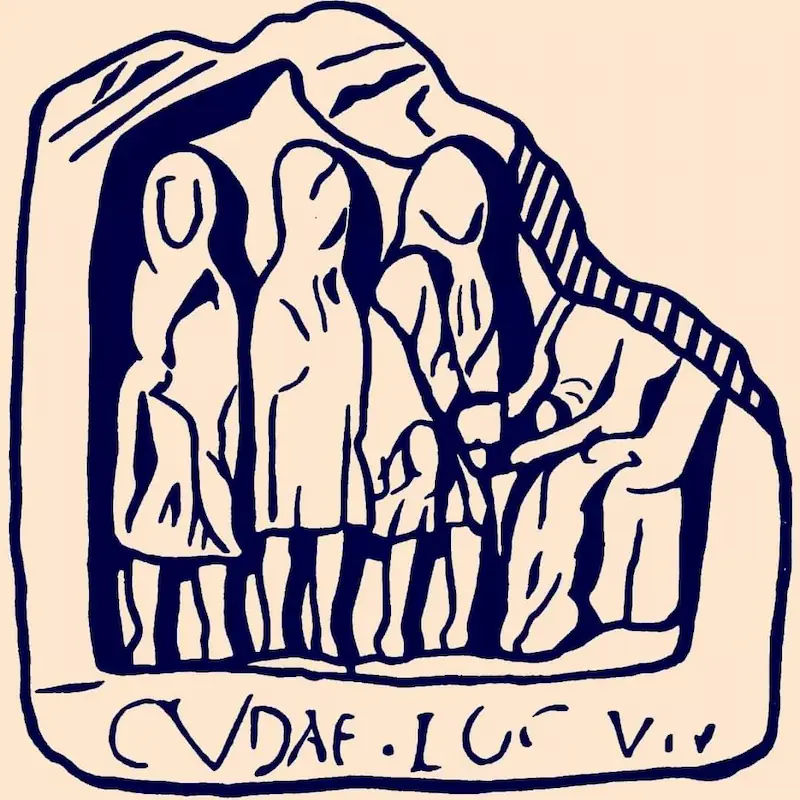
I asked Yeates about this and he informed me that the inscription was revealed by Raking Light in 1951.

The inscription has been accepted in RIB (Roman Inscriptions of Britain) and Professor Toynbee interprets the seated figure as a Mother Goddess and the standing figures as a triad of genii cuculatti.

AMPLIFY STROUD is 100% reader-supported and we can't do this without your help.
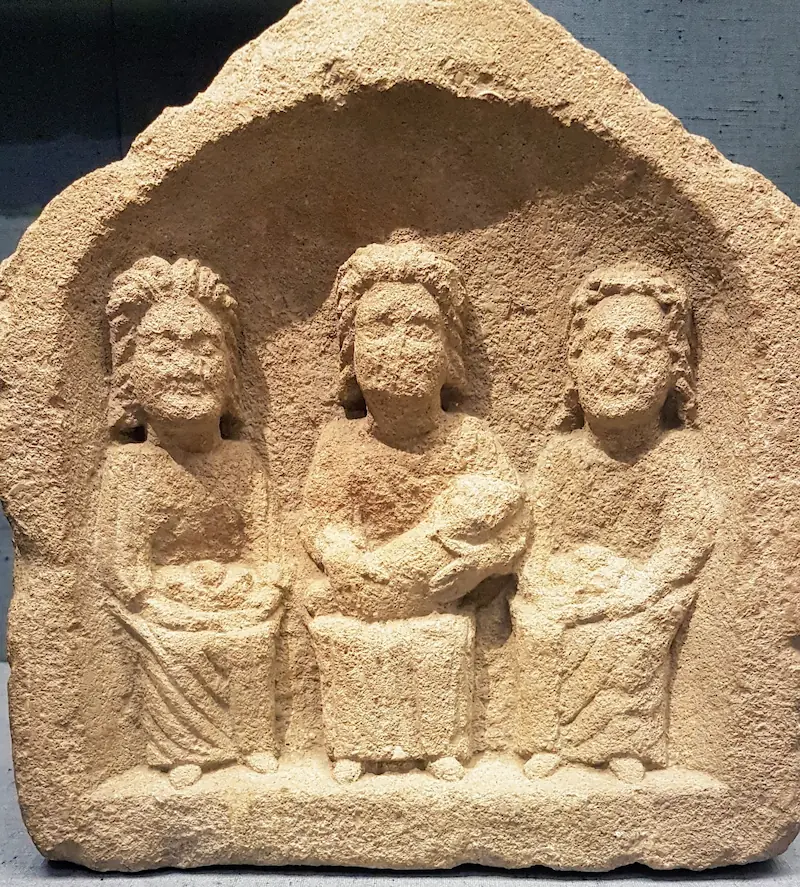
There are many other plinths and votive sculptures in the museums in Cheltenham, Gloucester, Cirencester and Oxford that speak to the long history of Goddess worship here in the Cotswolds.
Many of these were found at springs and water shrines: they depict the seated mother Goddess with abundance in her lap and the hooded Cuculatti in attendance.
These ancient stone depictions dating from the Romano-British era open up a window of opportunity to interpret not only our pagan past but also the position of the divine feminine in the Dobunni tribe who were here when the Romans invaded.
The Dobunni Coin
A COIN OF THE DOBUNNI TRIBE has recently been found at the Heavens in Stroud.
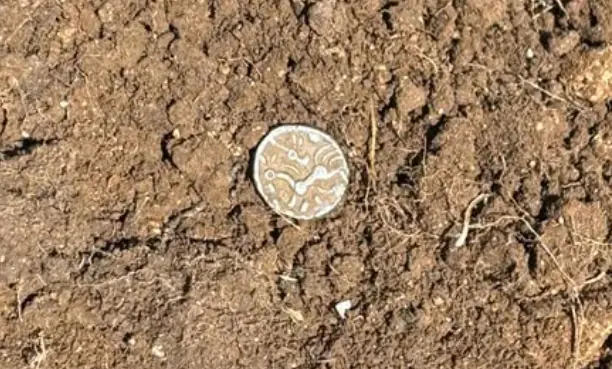
There are regular guided walks exploring the archaeology of this wonderful community owned land.
These artifacts can help us to ground and remember a new/old way of being which respects the feminine, which respects nature.
On April 18th I’ll be leading a group through a day given over to exploring Cuda. We will be at the Corinium Museum in Cirencester in the morning where we will have the very special and rare opportunity to sit with the plinth which bears her name out of the glass cabinet up close.
I will also be presenting my research into the Goddess culture of Old Europe and the place of Cuda in this pantheon. There will be a chance to look around the museum’s collection at all the other mother Goddesses and in the afternoon we will go out onto the land near Painswick to do a ceremony to tune into and invoke Cuda and the spirits of place and to view the landscape through the lens of our ancestors.
All women and men who are interested in ancient Goddess culture and its relevance to us today are welcome.
Return of the Sacred Feminine
THIS RESURGENCE OF GODDESS culture locally and more widely, chimes with my own training.
Over 20 years ago one of my Shamanic teachers impressed upon us that the path we were embarking upon was about bringing the sacred feminine back into balance.
We learned many many tools on this training: for one-to-one healing with clients; for holding ceremonies; for teaching initiations to groups; for facilitating rites of passage; for end-of-life transition.
It was a deeply involving and transformative 3-year training which included a psychological dismemberment process and change of outlook. Out of all of this the most striking teaching for me was to acknowledge the at once simple and, to me, shattering notion that we had grown up in a culture which not only denigrates women, (yes, feminism teaches us a lot about this, of course), but which also denigrates the deep feminine, mother earth, the divine feminine, Goddess.
In coming into a deeper, more soulful relationship with earth as mother through this training, we were exploring breadths and depths of feminine as divine, nurturing, fierce, protective... and how this could match the masculine. It was a fundamental shift in consciousness which enabled us to feel at home here on earth in a deeply nourishing way which also called us to gratitude and stewardship. The impetus was one of embodiment and rooting as well as reaching for the stars and it was profoundly life-changing.
Looking back to 40 years ago when I was an undergraduate and looking at sexism and feminism, it is striking that there was no spiritual element to this enquiry, in fact the concept of Goddess would have been alien to me back then.
The emphasis was political and human-centric. Since this time I have come to perceive that the feminine way can lead us into a soulful way of being here on earth which emphasises relationship with rather than power over nature.
40 years ago I was unaware of the work of the archaeologist Marija Gimbutas whose discoveries about Goddess culture were much-maligned in her time but are now being treated respectfully by the establishment.
Gimbutas presents a compelling overview of prehistory and demonstrates tens of thousands of years of human veneration of the feminine.
Reading archaeology through her eyes has changed the way I look at the ceremonial landscape here in the Cotswolds and it is out of a prehistory of goddess culture that the plinths and votive sculptures found locally emerge.
As the scales fall from our eyes, we are seeing the unveiling of institutional corruption on an industrial level in all pillars of society. Hand-in-hand with the unmasking of end-of-empire excess and its inevitable implosion is the re-emergence of feminine power and Goddess.
Meet Cuda the Cotswolds Goddess
CONNECTING WITH THE NATURAL WORLD and invoking the divine feminine brings me great solace on days when the ills of the world seem too much to bear.
If this article resonates with you, you may be interested in the nourishing day of connection with spirits of place and ancient natural spirituality that will be taking place next week at the Coronium Museum in Cirencester.
MEET CUDA THE COTSWOLDS GODDESS
18th April 2026 (10.30am — 5.30pm) Corinium Museum Cirencester & in Nature
I’ll be leading a day looking at Cuda and the culture of the Dobunni. We will be at the Corinium Museum in the morning where we will have the very special and rare opportunity to sit with the plinth which bears her name out of the glass cabinet up close.
I will also be presenting my research into the Goddess culture of Old Europe and the place of Cuda in this pantheon.
There will a chance to look around the museum’s collection at all the other mother Goddesses and in the afternoon we will go out onto the land near Painswick for a ceremony invoking Cuda and the spirits of place that will let us view the landscape through the eyes of our ancestors.
Amplify readers are eligible for a special discount of £20 off! (£50 instead of £70). Select full price ticket then enter this code at the checkout: CUDA
Kate Dineen is a Shamanic Healer, Teacher & Celebrant and more information can be found at www.katedineen.com for one-to-one healing, ceremonies, ritual, workshops and River Blessings.
AMPLIFY STROUD is 100% reader-supported and we can't do this without your help.
Amplify Stroud is supported by Dialect rural writers collective. Dialect offers mentorship, encouragement and self-study courses as well as publishing.
You can find out more at https://www.dialect.org.uk/
Member discussion